Energy is one of Idaho's quietest large industries. It spans a national nuclear laboratory, a downtown heated by hot water pumped from underground, a grid built on Snake River hydropower, and an agricultural economy that doubles as a fuel source. Its highest-profile recent project, though, did not survive — a reminder that the economics of new power are as decisive as the engineering.
INL and the reactor that wasn't built
The Idaho National Laboratory near Idaho Falls is the U.S. Department of Energy's lead nuclear-energy research lab and one of eastern Idaho's largest employers. For years its highest-profile tenant-in-waiting was the Carbon Free Power Project, a plan dating to 2014 to build a NuScale small modular reactor plant — six 77-megawatt modules, 462 megawatts in all — on the INL site.
It didn't get built. In November 2023, NuScale and the Utah Associated Municipal Power Systems terminated the project after the estimated cost rose from $3.6 billion to $9.3 billion and subscriptions from participating utilities fell short, as Utility Dive reported. The cancellation was a national story precisely because the project had been positioned as the country's first commercial small modular reactor. The lesson for Idaho's energy economy was blunt: even with federal backing and a marquee site, new nuclear lives or dies on cost and committed buyers.
Nuclear research continues
The reactor's cancellation did not diminish INL's role — if anything it sharpened it. The lab remains the center of U.S. advanced-reactor research, fuel development, and nuclear-security work, and it continues to draw federal funding, scientists, and contractors to eastern Idaho. For the regional economy around Idaho Falls, INL is a stable, high-wage anchor whose payroll and research spending ripple through housing, services, and local suppliers regardless of whether any single reactor gets built on the desert site.
Geothermal under the streets
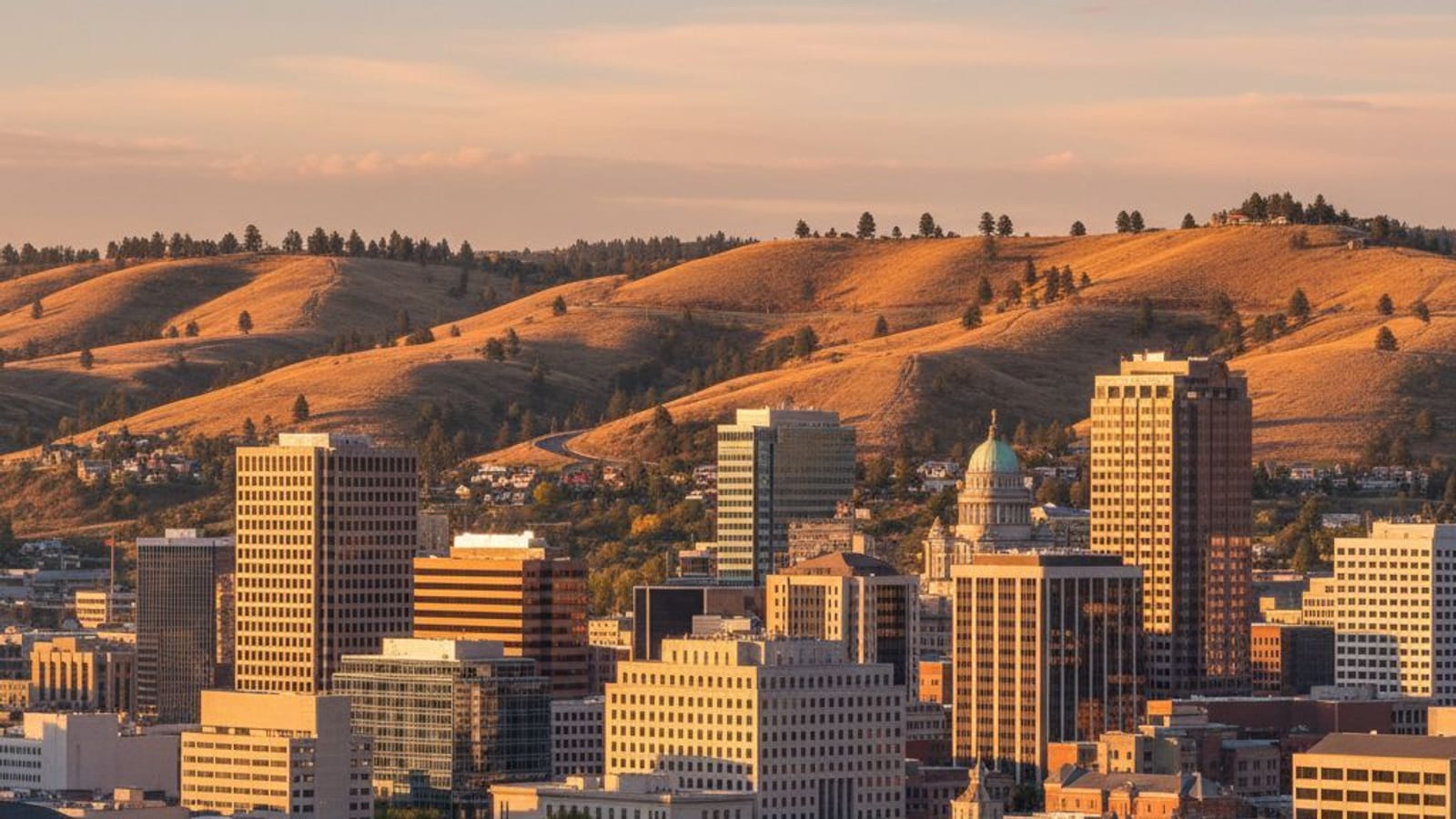
Boise sits on a resource most cities would envy: geothermal water. The city operates one of the largest geothermal direct-use district heating systems in the United States, piping naturally hot water to heat dozens of downtown buildings — a low-carbon system that has run since the early 1980s and still expands building by building. It is a genuine competitive quirk, quietly lowering heating costs for a slice of downtown and giving Boise a decarbonization story most cities can't match.
Hydropower and the grid
Idaho's electricity has historically leaned on hydropower, with dams along the Snake River supplying a large share of the state's generation and helping keep rates comparatively low. That hydro base is both an advantage and a limit: it is clean and cheap, but it is largely built out and sensitive to drought and snowpack. As demand rises, the state increasingly has to add capacity from other sources — solar, wind, natural gas, and purchased power — and to invest in the transmission needed to move it, which is where much of the future cost and debate will sit.
Biofuels and agriculture's energy side
Idaho's farm economy is also an energy story. The state's crops feed ethanol and biofuel production — ethanol has been produced at facilities such as the plant in Burley — and agricultural byproducts increasingly factor into renewable-fuel and biogas projects, including dairy digesters that turn manure into energy. It is a smaller piece than nuclear or hydropower, but one tied directly to the state's largest traditional industry, and it gives Idaho agriculture a second revenue stream as fuel markets evolve.
The throughline across all of it is demand. Electricity use is climbing from data centers, from advanced manufacturing such as Micron's Boise semiconductor fabs, and from sheer population growth. Chip fabrication in particular is enormously power- and water-intensive, which turns energy capacity into an economic-development question: the state has to be able to power what it is trying to attract. Meeting that load will require some combination of new generation, transmission upgrades, efficiency, and — potentially — a future revival of advanced nuclear at INL on terms that actually pencil out.
For a state that markets cheap, clean power as a selling point, energy capacity is quietly becoming one of the binding constraints on growth. Whether Idaho meets rising demand with more solar, firmed renewables, transmission, or next-generation nuclear, the decisions made this decade will shape both electricity bills and the state's ability to keep landing the kind of high-value employers that made energy a strategic industry in the first place.