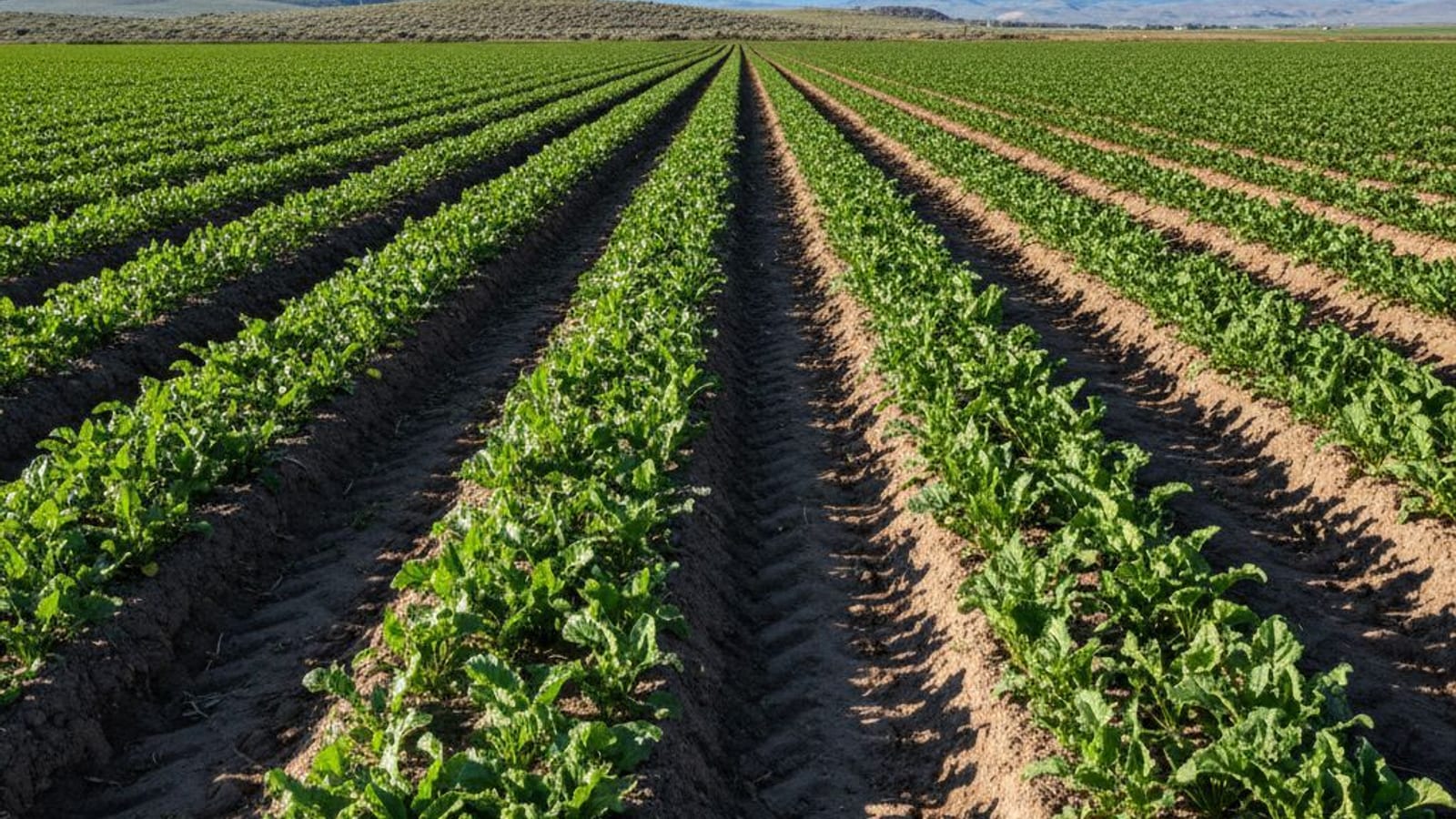
Wettest April on record fails to offset driest winter
Boise set a new April rainfall record of 3.87 inches on April 22, breaking a mark that stood since 1912. Despite Idaho experiencing the wettest April in history, questions remain as to whether the record rainfall will offset a lower irrigation water supply this season due to the state's driest winter since 1934.
"In this wet April, we have seen drought categorizations increase," said David Hoekema, a hydrologist with the Idaho Department of Water Resources. "It's because we lack the snow. The common person may not realize just how critical snow is."
Idaho experienced its second-warmest snow accumulation season — October through March — since 1896, with only the winter of 1933-34 being warmer. By April 1, snowpack across Idaho was the lowest on record, with 54 snow course locations and 45 SNOTEL sites in the Snake River Basin reporting record-low Snow Water Equivalent values.
Gov. Brad Little issued an emergency drought declaration for each of the state's 44 counties in April.
Why snow matters more than rain for Idaho agriculture
The problem, as far as the state's 2026 water supply outlook is concerned, is that much of the precipitation came in the form of rain rather than snow. Rain is good but snow is what fills the state's reservoirs, which supply water for farmers, recreationists, subdivisions and more during the hot, dry summer months.
"Precipitation, it's actually somewhat unusual, we are, I think, about 100% of median," said Timothy Link, professor and director of the water resources graduate program at the University of Idaho. "We always kind of joke that there's no such thing as an average or median year, but this year we're dead on due to precip, but due to warmer conditions the snowpack is — I think, less than 50%."
"So we really rely on the snowpack building up in the mountains. That is our largest reservoir. Because of all the rain that fell in the Boise basin, we were able to fill the reservoirs quite a bit earlier, about a month earlier than normal."
With nearly three-quarters of Idaho's surface water produced by snow, state snowpack levels as of May 1 this year were reported to be about 58% of normal, according to statistics provided by the NRCS Water Supply Outlook Report.
March 2026 was the second warmest March on record dating back to 1896, and a heat dome across the southwestern United States drove temperatures above the 98th percentile across much of the state. That warmth triggered accelerated snowmelt beginning March 17, including at elevations above 10,000 feet where snow typically persists for at least another month.
Farmers face crop decisions, acreage cuts
"Every Idahoan will feel the impact of this low snow year," said Erin Whorton, a water supply specialist at the Natural Resources Conservation Service Idaho. "Changes in timing and amount of runoff pose significant water supply challenges for agricultural producers, outdoor recreation and energy sectors. With very little snow left in the mountains to sustain streamflow into the dry summer months, our rivers could reach record-low flow conditions."
"One thing farmers will have to do in a situation like this is look at what crops they have planted," Hoekema said. "They'll need to plant more early season crops or even reduce the amount of what they refer to as cash crops by reducing the acreage."
"We are leaving out a couple hundred acres that we are not planting this year," Meridian farmer Neil Durrant said. "If we get the same type of winter in spring going into next year, we could be leaving out half the acreage we farm."
Many farms in southern Idaho are non-irrigated and rely on rainfall, a practice known as dryland farming, Idaho wheat commissioner Wayne Hurst told the Idaho Statesman. Hurst said that for dryland farmers, the dry spring has already affected their livelihoods. "The last several months have been really tough for them and their crops because they never received the natural precipitation they rely on," Hurst said.
Hoekema said the Boise Basin faces about a 50% chance of water shortages this season. In the Upper Snake River, the current supply is about 11% below typical demand, and a hot, dry summer would deepen the shortfall.
Senior surface water users on the Snake River Plain face a predicted shortfall of 181,600 acre-feet heading into the 2026 irrigation season.
Wildfire season outlook worsens
The same conditions threatening agriculture are elevating wildfire risk across Idaho.
The Gem State is heading into summer with the second warmest winter since 1934, and the Treasure Valley area saw three times the average precipitation fall in April. These conditions, combined with an early dry spell for the state, mean there's plenty of fuel for wildfires.
Heavy rain that occurred in southwest Idaho in early April has resulted in significant grass growth. That grass, now drying under warmer temperatures, creates abundant fine fuel for fast-moving fires.
A historically low snowpack and forecasts for above-average temperatures and below-average precipitation through the summer, into early fall, mean "by August, our entire state is expected to have above normal significant fire potential," Idaho State Forester Julia Lauch told the Idaho State Board of Land Commissioners on May 19.
The National Interagency Fire Center says that over the last 10 years, 2026 saw the most acres burned nationally before June. Last year, 5.1 million acres burned across the U.S., and this season, 2.4 million acres have been charred.
"We are going into the fire season with this long-term dry spell that we've been dealing with," said Chad Merrill, senior meteorologist with AccuWeather. "Much of southern Idaho is in a moderate to extreme drought, whereas last year we were only dealing with moderate drought."
Even though it is still spring and the hottest, driest months of the year are ahead, fire season is already active in Idaho. Last week, multiple homes burned and six law enforcement officers were injured during evacuation efforts after a brush fire started May 26 in Mountain Home, according to the Idaho Office of Emergency Management.
Drought severity varies across the state
Data issued by the U.S. Drought Monitor indicate Owyhee County as having "exceptional drought conditions," the highest on the scale and the most severe statewide.
Water supplies are running 14% short in the Big Lost basin, 53% short in the Big Wood basin near Sun Valley, and 58% short in the Salmon Falls Creek basin along the Nevada border.
"The one advantage we have in the Boise system is that our reservoirs are nearly full," Hoekema said. In the Treasure Valley, the reservoir system will likely fill this year, but Whorton cautioned all area residents should remain conscientious of their water usage.
Hoekema stressed that 2026 is not yet one of Idaho's worst drought years on record, thanks largely to stored water in reservoirs. But with limited snowmelt to refill those systems, the real concern is going into next year, when many reservoirs could be heavily depleted.
The National Weather Service Climate Prediction Center predicts that an El Niño pattern will start in late spring or early summer, which for the Pacific Northwest typically means warmer and drier conditions than normal.
Concerns could extend beyond this year. Meteorologists predict Idaho is likely heading into a warmer, drier El Niño pattern, with a chance of what forecasters are calling a "super El Niño."
"We expect if we have a second drought year next year, it will be worse than this year," Hoekema said. "This is by far the worst single year of runoff out of the mountains that I have seen."
Idaho only has about $3 million in the state wildfire suppression fund, an Idaho Department of Lands spokesperson said. The Idaho Legislature is transferring another $30 million to the wildfire suppression fund on July 1, the first day of the 2027 fiscal year.
Gov. Brad Little said in an April statement the funding may be insufficient. "Simply put, if we have a bad fire year, the amount the Legislature appropriated for fire suppression will not be enough to cover the bills for the fires the state is responsible for," he said at the time while approving the budget.
Hoekema urged homeowners to cut back on lawn irrigation. "In a drought year, you want to do everything you can to reduce irrigation to the minimum so that we can get it to the farms," he said.